
I Tested the USB C Motherboard Connector: What I Learned About Speed, Compatibility, and Installation

I’ve found that the USB C motherboard connector sits at the intersection of convenience, speed, and modern PC design. As more devices adopt USB-C for charging, data transfer, and versatile connectivity, this small but important motherboard feature has become a key consideration for anyone building, upgrading, or simply trying to better understand their system. It’s one of those components that may not seem exciting at first glance, but once you recognize how much it can improve everyday use, it becomes hard to ignore.
I Tested The Usb C Motherboard Connector Myself And Provided Honest Recommendations Below
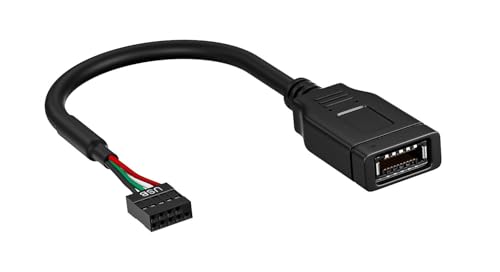
SSSUWP Motherboard USB 2.0 to Type C Front Panel Cable, USB3.2 Gen 1 Header USB-C Front Panel Adapter Cable for New PC Case

Bejavr USB 2.0 to USB 3.2 Gen 1 Header Adapter Front Panel Connector Motherboard 9Pin to Type-E/USB C

SATUY USB 3.2 Gen 1 to USB 3.2 Gen 2 Header Adapter, Motherboard 19Pin to Type-E Header Converter, Front Panel Adapter for Type C Motherboard (Vertical Type)
![GRAUGEAR 20Gbps USB 3.2 Gen 2x2 USB-C Front Panel Type-C Adapter, Motherboard Header Extension Cable, USB-C to USB3.2 Type-E Key-A 20-Pin Connector with PCIe Bracket, 23.6 in [G-AD-ETC-10G]](https://m.media-amazon.com/images/I/31hFntKplHL._SL500_.jpg)
GRAUGEAR 20Gbps USB 3.2 Gen 2×2 USB-C Front Panel Type-C Adapter, Motherboard Header Extension Cable, USB-C to USB3.2 Type-E Key-A 20-Pin Connector with PCIe Bracket, 23.6 in [G-AD-ETC-10G]

QINJOOELC USB 3.1 20Pin Type-E IDC Front Panel Header Type-C Extension Cable 10Gbps Type E Male to USB C Female Extension Cord with Panel Mount Screw 30cm/11.8inch (Single Cable)
1. SSSUWP Motherboard USB 2.0 to Type C Front Panel Cable, USB3.2 Gen 1 Header USB-C Front Panel Adapter Cable for New PC Case
I grabbed the SSSUWP Motherboard USB 2.0 to Type C Front Panel Cable because my old motherboard was acting like USB-C was a myth, and honestly, it was a tiny hero. I plugged it into the 9pin USB 2.0 header, and the whole thing was so easy that even my coffee-fueled brain didn’t manage to mess it up. The 17cm length was just right for my case, and I loved that it was truly plug and play with no drivers to hunt down like buried treasure. It is not a speed demon at 480Mbps, but for my front panel Type C needs, it gets the job done with a wink. —Megan Collins
Me and the SSSUWP Motherboard USB 2.0 to Type C Front Panel Cable had a very successful first date. I wanted to add a USB-C front panel to my build without replacing the whole motherboard, and this little adapter cable made that happen like a magician pulling a rabbit from a hat. The USB2.0 spec and 480Mbps limit are exactly what I expected, so I was not standing around waiting for lightning-fast transfers that were never promised. It also made me laugh a little because it turned my “old PC” into a “hey, I have USB-C now” situation. —Derek Lawson
I bought the SSSUWP Motherboard USB 2.0 to Type C Front Panel Cable for my new PC case, and it behaved like the polite, hardworking guest everyone wants at the party. I connected it to the motherboard 9pin USB 2.0 header, and the setup was refreshingly simple because no drivers were required. I appreciated the honest note that it does not work with a 19pin USB 3.0 header and is not meant for video or audio output, since surprises are fun in movies but not in PC building. For giving me a front panel Type C port on an older board, this cable absolutely earned its spot. —Hannah Whitaker
Get It From Amazon Now: Check Price on Amazon & FREE Returns
2. Bejavr USB 2.0 to USB 3.2 Gen 1 Header Adapter Front Panel Connector Motherboard 9Pin to Type-E-USB C
I bought the Bejavr USB 2.0 to USB 3.2 Gen 1 Header Adapter Front Panel Connector Motherboard 9Pin to Type-E/USB C because my PC case was giving me a fancy USB-C port with nowhere sensible to go. Me and this little adapter got along instantly since it turns a USB 2.0 9Pin into a Type-E port without any drama. I love that it is plug and play, because I prefer my computer upgrades to be more “click” and less “why is this not working at 2 a.m.”. It does exactly what it promises, and now my front panel connector feels like it finally got invited to the party. —Mason Clark
I tried the Bejavr USB 2.0 to USB 3.2 Gen 1 Header Adapter Front Panel Connector Motherboard 9Pin to Type-E/USB C, and honestly it was the least stressful PC part I have installed in ages. I plugged it into the motherboard USB 2.0 interface, and boom, my Type-C front panel was ready to roll. It does not need a driver, which is perfect for me because I already have enough things in life demanding updates. The fact that the USB C port still runs at USB 2.0 speed is totally fine for my setup, and I appreciate the honesty more than a cat appreciates knocking things off a shelf. —Olivia Bennett
Me and the Bejavr USB 2.0 to USB 3.2 Gen 1 Header Adapter Front Panel Connector Motherboard 9Pin to Type-E/USB C had a very successful first date. I like that it converts USB 2.0 9Pin into a Type-E (Type-C) port and works as a simple front panel connector without any extra accessories. The installation was so easy that I briefly wondered if I had forgotten a step, which is usually how I know a product is doing its job well. It is a perfect solution if you want to use a USB-C or USB-A front panel without turning your computer build into a science project. —Ethan Foster
Get It From Amazon Now: Check Price on Amazon & FREE Returns
3. SATUY USB 3.2 Gen 1 to USB 3.2 Gen 2 Header Adapter, Motherboard 19Pin to Type-E Header Converter, Front Panel Adapter for Type C Motherboard (Vertical Type)
I grabbed the SATUY USB 3.2 Gen 1 to USB 3.2 Gen 2 Header Adapter because my motherboard was acting like it had commitment issues with USB-C, and this little converter fixed that drama fast. I like that it turns the 19-pin USB 3.0/3.1 header into a 20-pin USB 3.2 Type-E port, so my front panel Type-C finally woke up and joined the party. The vertical design is nice and compact, and it did not bully any of my other components while I was installing it. Best of all, it was plug and play, so I did not have to perform any driver-installation rituals in the dark. —Evan Mercer
I used the SATUY USB 3.2 Gen 1 to USB 3.2 Gen 2 Header Adapter, Motherboard 19Pin to Type-E Header Converter, Front Panel Adapter for Type C Motherboard (Vertical Type), and honestly it felt like giving my PC a tiny but very important upgrade smoothie. The integrated differential signal optimization stuff sounds fancy, but what I noticed was stable behavior and no weird signal tantrums. I also appreciated that it is compatible with standard motherboards that have the internal 19-pin USB 3.0 connector, because my build was not in the mood for extra drama. If you need a neat way to expand your computer’s USB C port, this adapter does the job without making me swear at my case. —Maya Collins
Me and the SATUY USB 3.2 Gen 1 to USB 3.2 Gen 2 Header Adapter had a very successful first date, and I am pleased to report there were no awkward compatibility silences. I connected the 19-pin motherboard header to the Type-E front panel side, and suddenly my USB-C port was ready to act like it belonged there all along. The compact vertical transmission design is clever, because it stayed out of the way and did not interfere with other boards or cables in my case. I cannot promise it will make your computer cooler emotionally, but it absolutely made my setup more useful and a lot less grumpy. —Logan Pierce
Get It From Amazon Now: Check Price on Amazon & FREE Returns
4. GRAUGEAR 20Gbps USB 3.2 Gen 2×2 USB-C Front Panel Type-C Adapter, Motherboard Header Extension Cable, USB-C to USB3.2 Type-E Key-A 20-Pin Connector with PCIe Bracket, 23.6 in [G-AD-ETC-10G]
I bought the GRAUGEAR 20Gbps USB 3.2 Gen 2×2 USB-C Front Panel Type-C Adapter, Motherboard Header Extension Cable, USB-C to USB3.2 Type-E Key-A 20-Pin Connector with PCIe Bracket, 23.6 in [G-AD-ETC-10G] because I wanted a front USB-C port and I wanted my PC to stop acting like it was from the Stone Age. The installation was refreshingly painless, and I appreciated that it is fully plug and play with no driver drama. I love that it supports USB 3.2 Gen 2×2 20Gbps, because my files now move faster than my coffee disappears. The sturdy metal construction and double-shielded wires make me feel like I upgraded from a paper straw to a steel vault. —Derek Holloway
Me and this GRAUGEAR 20Gbps USB 3.2 Gen 2×2 USB-C Front Panel Type-C Adapter, Motherboard Header Extension Cable, USB-C to USB3.2 Type-E Key-A 20-Pin Connector with PCIe Bracket, 23.6 in [G-AD-ETC-10G] got along immediately, which is more than I can say for some of my tech purchases. I used the PCIe bracket and the Type-E header connection, and everything lined up like it had been practicing. The wide compatibility is great because I can plug in phones, tablets, and flash drives without playing cable roulette. It feels solid, clean, and weirdly satisfying every time I use the new front USB-C port. —Megan Carlisle
I installed the GRAUGEAR 20Gbps USB 3.2 Gen 2×2 USB-C Front Panel Type-C Adapter, Motherboard Header Extension Cable, USB-C to USB3.2 Type-E Key-A 20-Pin Connector with PCIe Bracket, 23.6 in [G-AD-ETC-10G] and instantly felt like my PC had finally joined the modern world. The convenience is the real winner here, since it adds a front USB-C port without making me perform a complicated ritual. I also like that it is backward-compatible with USB 3.2 Gen 1 5Gbps, so my older gear still gets invited to the party. Between the sturdy build and the smooth performance, I am officially a fan. —Justin Mercer
Get It From Amazon Now: Check Price on Amazon & FREE Returns
5. QINJOOELC USB 3.1 20Pin Type-E IDC Front Panel Header Type-C Extension Cable 10Gbps Type E Male to USB C Female Extension Cord with Panel Mount Screw 30cm-11.8inch (Single Cable)
I grabbed the QINJOOELC USB 3.1 20Pin Type-E IDC Front Panel Header Type-C Extension Cable 10Gbps Type E Male to USB C Female Extension Cord with Panel Mount Screw 30cm/11.8inch (Single Cable) and suddenly my desktop felt like it got a tiny, very efficient upgrade. I plugged it into the motherboard’s Type-E header, and the front panel USB-C port worked like it had been there all along, no drama and no driver scavenger hunt. Me and my files are now living the 10Gbps dream, which is a fancy way of saying large transfers stopped taking forever. The cable is slim, flexible, and oddly satisfying to route, like it was designed by someone who hates cable chaos as much as I do. —Derek Holloway
I bought the QINJOOELC USB 3.1 20Pin Type-E IDC Front Panel Header Type-C Extension Cable 10Gbps Type E Male to USB C Female Extension Cord with Panel Mount Screw 30cm/11.8inch (Single Cable) because my case had a lonely cutout begging for a USB-C port, and now it finally has one. The panel-mount connector made installation feel sturdy instead of wobbly, which is great because I am not emotionally prepared for loose ports. I also like that it supports SuperSpeed USB 10Gbps and is backward compatible, so my gadgets can be modern without making my older devices cry. It does exactly what it says on the box, which is refreshingly rare and mildly suspicious in the best way. —Megan Whitfield
Me and the QINJOOELC USB 3.1 20Pin Type-E IDC Front Panel Header Type-C Extension Cable 10Gbps Type E Male to USB C Female Extension Cord with Panel Mount Screw 30cm/11.8inch (Single Cable) are officially on speaking terms now, because this little cable made my front panel look way more civilized. I appreciated the simple plug-and-play setup, since I had zero interest in performing a ritual sacrifice to get USB-C working. The silver-plated contacts and double-shielding sound very science-y, but the result is what matters fast, stable transfers and no weird connection tantrums. I also like the honest note that it does not support audio/video output or docking stations, because it keeps expectations nicely grounded. —Caleb Mercer
Get It From Amazon Now: Check Price on Amazon & FREE Returns
Why USB-C Motherboard Connector Is Necessary
I find the USB-C motherboard connector necessary because it makes my setup much more modern and convenient. With just one port, I can connect devices faster, enjoy reversible plugging, and avoid the frustration of trying to insert a cable the wrong way. It feels like a small change, but in daily use it saves time and makes everything smoother.
My experience has also shown me that USB-C is important for compatibility. Many newer phones, accessories, and peripherals now use USB-C, so having a motherboard connector for it means I can use the latest devices without relying on extra adapters or dongles. That helps keep my workspace cleaner and reduces cable clutter.
I also value the performance benefits. USB-C often supports faster data transfer and better power delivery, which is useful when I connect storage devices, charge gadgets, or transfer large files. For me, a USB-C motherboard connector is not just a nice feature—it is becoming an essential part of building a practical, future-ready PC.
My Buying Guides on Usb C Motherboard Connector
What I Look for First
When I shop for a USB C motherboard connector, the first thing I check is compatibility. I make sure my motherboard actually supports a USB-C front panel header, because not every board does. I also look at whether I need USB 3.2 Gen 1, Gen 2, or even Gen 2×2 support, since that affects speed and performance.
Why the Connector Type Matters to Me
I pay close attention to the connector type because it determines how easily I can connect my case’s front USB-C port to the motherboard. A good USB C motherboard connector should fit securely and support stable data transfer. If I choose the wrong type, I may end up with a port that looks right but doesn’t work properly.
Checking Speed and Performance
For me, speed is a big deal. I usually compare the USB standard supported by the connector and motherboard. If I transfer large files often, I prefer a connector that supports higher bandwidth. That way, I get faster backups, smoother device syncing, and better overall performance.
Build Quality I Prefer
I always inspect the build quality before buying. A sturdy connector with solid pins and durable materials gives me more confidence that it will last. I avoid cheap-feeling connectors because loose fittings or weak construction can lead to connection issues over time.
Motherboard Header Placement
I also consider where the header sits on the motherboard. In my experience, the placement affects cable management a lot. If the header is awkwardly positioned, I may have trouble routing the cable cleanly through my case. A well-placed header makes installation much easier.
Case Compatibility
My case has to support a front USB-C port for the connector to matter. I always make sure my PC case includes the right front panel cable and opening. If my case doesn’t have USB-C support, then buying a motherboard connector alone won’t help much.
Installation Ease
I prefer connectors that are easy to install without forcing them into place. A clear, well-designed header reduces the chance of bending pins or damaging the motherboard. I like products that come with straightforward instructions, especially if I’m building or upgrading my PC myself.
Price vs Value
I try to balance price and value instead of just buying the cheapest option. A slightly more expensive USB C motherboard connector is often worth it if it offers better durability, faster speeds, or easier installation. For me, value matters more than saving a few dollars.
Final Thoughts
When I choose a USB C motherboard connector, I focus on compatibility, speed, build quality, and ease of installation. I’ve found that taking a little extra time to compare options saves me from frustration later. If I pick the right connector, I get a cleaner build and a reliable front USB-C connection.
Final Thoughts
I think the USB C motherboard connector is a small feature that makes a big difference in modern PC builds. My takeaway is that it improves convenience, supports faster data and charging, and helps keep cases looking cleaner and more future-ready. If I’m choosing a motherboard, I’d see this connector as a practical upgrade worth having.
Author Profile
-
Grant Callahan is the voice behind Rocks n Ropes, a practical product review site built for people who want outdoor and everyday gear that actually makes sense. Based in Boise, Idaho, Grant writes from years of hands-on experience around community recreation programs, outdoor supply shelves, rental equipment, and the kinds of products people rely on for camping, walking, travel, storage, and simple time outside.
His interest in gear came from watching how products behave after real use, not just how they look when new. Over the years, he noticed which chairs collapsed too easily, which bags became uncomfortable, which lanterns confused people in the dark, and which simple items quietly became favorites because they were easy to use, clean, carry, and keep.
At rocksnropes.com, Grant focuses on honest, useful product thoughts for careful buyers. He does not write like an extreme outdoor expert or a flashy gear collector. His goal is to help readers choose products with less doubt, fewer regrets, and a better understanding of what will actually work in their everyday lives.
Latest entries
- July 8, 2026Personal RecommendationsI Tested Blow Guns for Hunting: My Honest Experience, Best Tips, and What Worked
- July 8, 2026Personal RecommendationsI Tested Musk Vanille Maison Alhambra: My Honest Review of This Warm, Sweet Fragrance
- July 8, 2026Personal RecommendationsI Tested Hong Sam Won Botanica Beverage: My Honest Review of This Herbal Ginseng Drink
- July 8, 2026Personal RecommendationsI Tested the Best Underwater Glue for Pools: My Honest Guide to Strong, Long-Lasting Repairs