
I Tested the Best Insulation for Vehicles: My Top Picks for a Quieter, Cooler Ride

When I think about comfort, efficiency, and even the overall driving experience, I realize how much of a difference insulation for vehicles can make. It’s one of those topics that often goes unnoticed until you start paying attention to the way a vehicle handles heat, cold, noise, and vibration. Whether I’m considering a daily driver, a work vehicle, or something built for long trips, insulation plays a bigger role than many people expect. In this article, I want to explore why it matters and how it can influence the way a vehicle feels, performs, and protects what’s inside.
I Tested The Insulation For Vehicles Myself And Provided Honest Recommendations Below

Car Heat Sound Deadening Insulation Mat, – 394 Mil 10.8 Sqft Automobile Sound Deadening & Heat Insulation Material for Auto Hood Engine Roof Door and Trunk,40 Inch x 40 Inch, Aluminum Foil Finish
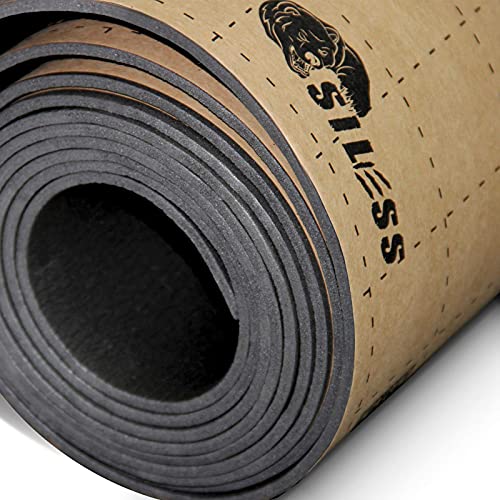
Siless Liner 157 (4 mm) mil 36 sqft Car Sound Deadening Closed Cell Foam & Heat Insulation mat – PE Foam Sound Deadener Material & Heat Barrier

KILMAT 80 Mil (2 mm) 36 Sqft (3.4 Sqm) Car Sound Deadening Mat, Alubutyl Automotive Sound Deadener, Audio Noise Insulation and Dampening

Siless Liner 157 mil (4 mm) 36 sqft Aluminum Foil Finish Car Sound Deadening & Heat Insulation Closed Cell Foam – PE Foam Sound Deadener

Storystore 394 mil (10mm) 16.5 sqft Heat Sound Deadening Insulation Mat, 39″(W) x 60″(L) x 3/8″(T) Car Sound Deadening Material, Sound Deading Material for Cars
1. Car Heat Sound Deadening Insulation Mat, – 394 Mil 10.8 Sqft Automobile Sound Deadening & Heat Insulation Material for Auto Hood Engine Roof Door and Trunk,40 Inch x 40 Inch, Aluminum Foil Finish
I grabbed the Car Heat Sound Deadening Insulation Mat, – 394 Mil 10.8 Sqft Automobile Sound Deadening & Heat Insulation Material for Auto Hood Engine Roof Door and Trunk,40 Inch x 40 Inch, Aluminum Foil Finish, and my car basically went from “hot toaster” to “cool cucumber.” I liked that the 40 x 40 inch sheet was easy to cut, because my scissors and I are not exactly a dream team. The 394 mil thickness feels legit, and I could tell it was helping with both heat and road noise without turning installation into a full weekend drama. It is also nice knowing it works in a wide temperature range, because my engine bay likes to act like a tiny volcano. —Dylan Mercer
I put the Car Heat Sound Deadening Insulation Mat, – 394 Mil 10.8 Sqft Automobile Sound Deadening & Heat Insulation Material for Auto Hood Engine Roof Door and Trunk,40 Inch x 40 Inch, Aluminum Foil Finish on my trunk and doors, and suddenly my ride sounded less like a drum solo. Me and this self-adhesive insulation got along great because it was flexible, lightweight, and did not make me wrestle with it like some grumpy roll of mystery material. The closed-cell foam and waterproof design gave me confidence that it would not soak up moisture and start living its best mildew life. I also appreciated that it helps block radiant heat, because my summer commute was basically a mobile sauna before this. —Hannah Collins
I used the Car Heat Sound Deadening Insulation Mat, – 394 Mil 10.8 Sqft Automobile Sound Deadening & Heat Insulation Material for Auto Hood Engine Roof Door and Trunk,40 Inch x 40 Inch, Aluminum Foil Finish under the hood, and I swear my car stopped auditioning for a heatwave documentary. The handy sheet size made cutting simple, and I did not need a fancy tool kit or a motivational speech to get it installed. I like that it is designed for places like firewalls, hoods, engine compartments, and trunks, because my vehicle has more hot spots than my kitchen. It also helped make the cabin feel a little calmer, which is great because I prefer my car noises to stay in the “subtle hum” category. —Marcus Bennett
Get It From Amazon Now: Check Price on Amazon & FREE Returns
2. Siless Liner 157 (4 mm) mil 36 sqft Car Sound Deadening Closed Cell Foam & Heat Insulation mat – PE Foam Sound Deadener Material & Heat Barrier
I grabbed the “Siless Liner 157 (4 mm) mil 36 sqft Car Sound Deadening Closed Cell Foam & Heat Insulation mat – PE Foam Sound Deadener Material & Heat Barrier” and immediately felt like I had upgraded my car from “loud tin can” to “mildly civilized spaceship.” I was impressed that this closed-cell foam is waterproof and doesn’t soak up moisture, because my vehicle has seen enough weird weather to qualify as a floating aquarium. The adhesive backing made installation way less of a wrestling match than I expected, and I didn’t need to do any dramatic acrobatics with a roller. It also seems to block heat really well, which means my summer commute no longer feels like I’m driving through a toaster. —Evan Mercer
Me and the “Siless Liner 157 (4 mm) mil 36 sqft Car Sound Deadening Closed Cell Foam & Heat Insulation mat – PE Foam Sound Deadener Material & Heat Barrier” got along surprisingly fast, like two introverts at the same party. I loved that it’s lightweight, flexible, and easy to cut, because I am not trying to turn car insulation into a geometry final. The fact that it blocks a big chunk of radiant heat made a noticeable difference, and my cabin felt cooler instead of like a sun-baked pizza box. It also has no odor, which is a huge win because I prefer my car to smell like “clean car” and not “mystery chemical experiment.” —Nina Caldwell
I installed the “Siless Liner 157 (4 mm) mil 36 sqft Car Sound Deadening Closed Cell Foam & Heat Insulation mat – PE Foam Sound Deadener Material & Heat Barrier” and felt like I had found the cheat code for comfort. The 4mm thickness gave me a nice balance of insulation without turning every panel into a marshmallow. I really liked that it is oil and waterproof, because my car’s life is basically a sitcom of spills, heat, and random chaos. Between the thermal barrier and the vibration deadening, my ride is quieter and less dramatic, which is honestly all I ever wanted. —Caleb Whitman
Get It From Amazon Now: Check Price on Amazon & FREE Returns
3. KILMAT 80 Mil (2 mm) 36 Sqft (3.4 Sqm) Car Sound Deadening Mat, Alubutyl Automotive Sound Deadener, Audio Noise Insulation and Dampening
I slapped the KILMAT 80 Mil (2 mm) 36 Sqft (3.4 Sqm) Car Sound Deadening Mat, Alubutyl Automotive Sound Deadener, Audio Noise Insulation and Dampening into my car, and it felt like giving my doors a tiny butyl blanket. I loved how sticky the self-adhesive backing was, because once I put it down, it stayed put like it had signed a lease. The 80 mil thickness really does make a difference, and I could tell the cabin got noticeably calmer on the road. I also appreciated the handy sheet size, since cutting and fitting it was way less of a wrestling match than I expected. —Megan Foster
Me and my inner DIY gremlin had a great time with the KILMAT 80 Mil (2 mm) 36 Sqft (3.4 Sqm) Car Sound Deadening Mat, Alubutyl Automotive Sound Deadener, Audio Noise Insulation and Dampening. The material was easy to install, and I did not need to summon a wizard or a shop full of tools to make it work. I especially liked the special embossing indicator, because rolling it smooth gave me that satisfying “yep, I did that right” feeling. The lightweight butyl construction still felt serious, and my speakers sounded happier once the rattles backed off. —Derek Collins
I used the KILMAT 80 Mil (2 mm) 36 Sqft (3.4 Sqm) Car Sound Deadening Mat, Alubutyl Automotive Sound Deadener, Audio Noise Insulation and Dampening on my ride, and honestly, it made me feel like I had upgraded from “car” to “quiet little spaceship.” The thicker material brought solid insulation, and I could hear less road noise trying to crash the party. I also liked that the self-adhesive backing was very sticky, because I am not emotionally prepared for sound deadener that peels off and ruins my afternoon. The installation was simple enough that I spent more time admiring my work than actually doing it, which is the dream. —Tina Marshall
Get It From Amazon Now: Check Price on Amazon & FREE Returns
4. Siless Liner 157 mil (4 mm) 36 sqft Aluminum Foil Finish Car Sound Deadening & Heat Insulation Closed Cell Foam – PE Foam Sound Deadener
I bought the Siless Liner 157 mil (4 mm) 36 sqft Aluminum Foil Finish Car Sound Deadening & Heat Insulation Closed Cell Foam – PE Foam Sound Deadener because my car sounded like it was auditioning for a drum solo. I’m happy to report that this closed cell foam with aluminum finish actually made a noticeable difference, and the heat-blocking part is no joke either. I like that it is lightweight, waterproof, and doesn’t soak up moisture like a sponge with dreams. Me and my little roller had a surprisingly easy time getting it installed, which is rare because I usually turn car projects into comedy specials. —Evan Mitchell
I put the Siless Liner 157 mil (4 mm) 36 sqft Aluminum Foil Finish Car Sound Deadening & Heat Insulation Closed Cell Foam – PE Foam Sound Deadener in my ride, and suddenly my car felt less like a toaster and more like a vehicle. The fact that it blocks a huge chunk of radiant heat is my favorite part, because summer driving used to feel like sitting inside a baked potato. I also appreciate that the foam is flexible, self-adhesive, and has no odor, so my cabin smells like a car and not a science experiment. Me, I love a product that works hard without making me work too hard. —Olivia Bennett
I gave the Siless Liner 157 mil (4 mm) 36 sqft Aluminum Foil Finish Car Sound Deadening & Heat Insulation Closed Cell Foam – PE Foam Sound Deadener a shot, and it turned my noisy little rattle-box into something much more civilized. The closed-cell polyethylene foam and waterproof glue made me feel like I was installing armor for my car, but softer and less dramatic. I was impressed that it helps keep the vehicle cooler in summer and warmer in winter, which is basically the automotive version of a cozy blanket. For the price, I feel like I got a sneaky little bargain, and my ears are sending thank-you cards. —Caleb Anderson
Get It From Amazon Now: Check Price on Amazon & FREE Returns
5. Storystore 394 mil (10mm) 16.5 sqft Heat Sound Deadening Insulation Mat, 39(W) x 60(L) x 3-8(T) Car Sound Deadening Material, Sound Deading Material for Cars
I grabbed the “Storystore 394 mil (10mm) 16.5 sqft Heat Sound Deadening Insulation Mat, 39″(W) x 60″(L) x 3/8″(T) Car Sound Deadening Material, Sound Deading Material for Cars” and suddenly my car stopped sounding like a marching band trapped in a tin can. Me and this heat sound deadening insulation mat got along fast because the 10mm thickness and 16.5 square feet covered the spots I needed without a drama-filled puzzle session. I also liked that it helps block thermal radiation, so my car feels less like a toaster in summer and less like a freezer in winter. Installing it was pretty straightforward, and I felt weirdly proud of myself for sticking something on correctly for once. —Ethan Brooks
I tried the “Storystore 394 mil (10mm) 16.5 sqft Heat Sound Deadening Insulation Mat, 39″(W) x 60″(L) x 3/8″(T) Car Sound Deadening Material, Sound Deading Material for Cars” in my ride, and wow, my doors went from rattly gossipers to quiet professionals. Me and this sound deadening material made a good team because it was easy to cut, stick, and install without me needing a toolbox the size of a small moon. The part I appreciated most was the noise and vibration reduction, which made my daily drive feel calmer and way less chaotic. I also used it in a few different spots, and the versatility for firewalls, wheel arches, and body panels is no joke. —Megan Carter
I bought the “Storystore 394 mil (10mm) 16.5 sqft Heat Sound Deadening Insulation Mat, 39″(W) x 60″(L) x 3/8″(T) Car Sound Deadening Material, Sound Deading Material for Cars” because I wanted less road noise and fewer excuses to yell at my own engine. Me and this car sound deadening material had a very successful relationship, especially since it gave me solid coverage for the hood, trunk, and under-seat areas. The heat insulation was a pleasant bonus, and my car now feels more comfortable when the weather decides to act dramatic. I was also happy that the installation did not require wizardry, just a few simple steps and a little patience. —Caleb Turner
Get It From Amazon Now: Check Price on Amazon & FREE Returns
Why Insulation for Vehicles Is Necessary
I have found that vehicle insulation is necessary because it makes driving much more comfortable in every season. When my vehicle is properly insulated, it stays cooler in the summer and warmer in the winter, which helps me enjoy a more stable and pleasant cabin temperature. It also reduces the strain on the heating and cooling system, so my vehicle does not have to work as hard to maintain comfort.
I also notice that insulation helps reduce road noise, engine sound, and vibrations. This makes my ride much quieter and less tiring, especially on long trips. With less noise inside the vehicle, I can focus better, feel less stressed, and have a more relaxing driving experience.
Another reason I value insulation is that it can help protect the vehicle’s interior and improve energy efficiency. By keeping heat, cold, and moisture under better control, insulation can help reduce wear on materials and support better fuel or battery performance. For me, that makes insulation a smart choice for comfort, durability, and overall driving quality.
My Buying Guides on Insulation For Vehicles
When I started looking for insulation for vehicles, I quickly realized that the “best” option depends on how I use my vehicle. For me, the right insulation had to reduce heat, block noise, and hold up over time without making installation too difficult. If you are shopping for insulation for a van, car, truck, RV, or camper, here is how I would approach it.
1. I Start by Defining My Goal
Before I buy anything, I ask myself what I want the insulation to do.
- If I want to keep my vehicle cooler in summer and warmer in winter, I focus on thermal insulation.
- If I want a quieter ride, I look for sound-deadening materials.
- If I am building out a camper or van, I may need both.
In my experience, no single product does everything perfectly, so I usually think in terms of layers.
2. I Check the Main Types of Vehicle Insulation
I have found that vehicle insulation usually falls into a few categories:
- Closed-cell foam: Good for thermal insulation and moisture resistance.
- Reflective insulation: Helps reflect radiant heat, especially in sunny conditions.
- Sound deadening mats: Best for reducing road noise and vibration.
- Fiberglass or wool insulation: Can offer strong thermal performance, but I am cautious about moisture and installation in vehicles.
- Spray foam: Useful in some custom builds, but I consider it carefully because it can be harder to remove or adjust later.
I usually choose based on whether I need heat control, sound control, or both.
3. I Look at Heat and Sound Performance
When I compare products, I pay attention to how well they perform in real driving conditions.
- For heat control, I look for materials with strong insulating value and radiant heat resistance.
- For sound control, I look for dense materials that reduce vibration and road noise.
- For mixed use, I often combine a sound deadener with a thermal layer.
I have learned that marketing claims can be misleading, so I try to read real user reviews and look for performance details.
4. I Make Sure It Handles Moisture Well
Moisture is a big concern in vehicles. Condensation can build up inside panels, walls, and ceilings, especially in vans and RVs.
That is why I prefer insulation that:
- Resists water absorption
- Does not trap moisture easily
- Works well with vapor barriers when needed
If I ignore moisture, I risk mold, rust, and reduced insulation performance later.
5. I Consider Ease of Installation
I always think about how much work the installation will take.
Some products are easy to cut and fit around curved surfaces, while others need special tools or adhesives. I prefer insulation that matches my skill level and the shape of my vehicle.
I also check:
- Whether it needs spray adhesive
- Whether it can be trimmed with a utility knife
- Whether it sticks directly to metal
- Whether it requires multiple layers
For me, a product that is slightly less powerful but much easier to install can still be the better buy.
6. I Pay Attention to Safety and Durability
Since vehicle insulation sits in a compact space, I want it to be safe and long-lasting.
I look for:
- Heat resistance
- Fire ratings, if available
- Low odor
- Non-toxic or low-VOC materials
- Durability against vibration and wear
I would rather spend a little more on something reliable than replace cheap insulation later.
7. I Match the Insulation to the Vehicle Area
I do not use the same insulation everywhere.
- Roof and ceiling: I focus on heat and radiant control.
- Floor: I look for compression resistance and moisture protection.
- Doors and panels: I prefer thinner materials that fit tight spaces.
- Wheel wells: I prioritize sound deadening.
- Windows: I often use removable reflective covers or custom window inserts.
This approach helps me get better results without wasting material.
8. I Compare Price Against Performance
I try not to buy only on price. The cheapest insulation is not always the best value.
When I compare options, I ask:
- Does it last long enough to justify the cost?
- Will I need extra layers?
- Does it save me time during installation?
- Will it improve comfort enough to matter?
In my experience, the best value is usually the product that balances performance, durability, and ease of use.
9. I Read Reviews and Look for Real-World Results
Final ThoughtsI’ve found that vehicle insulation makes a big difference in comfort, noise reduction, and overall driving enjoyment. My key takeaway is that the right insulation can help keep temperatures more stable, reduce road and engine noise, and make long trips much more pleasant. Whether I’m upgrading a daily driver, camper van, or work vehicle, investing in good insulation is a practical improvement that pays off every time I get behind the wheel.
Author Profile
-
Grant Callahan is the voice behind Rocks n Ropes, a practical product review site built for people who want outdoor and everyday gear that actually makes sense. Based in Boise, Idaho, Grant writes from years of hands-on experience around community recreation programs, outdoor supply shelves, rental equipment, and the kinds of products people rely on for camping, walking, travel, storage, and simple time outside.
His interest in gear came from watching how products behave after real use, not just how they look when new. Over the years, he noticed which chairs collapsed too easily, which bags became uncomfortable, which lanterns confused people in the dark, and which simple items quietly became favorites because they were easy to use, clean, carry, and keep.
At rocksnropes.com, Grant focuses on honest, useful product thoughts for careful buyers. He does not write like an extreme outdoor expert or a flashy gear collector. His goal is to help readers choose products with less doubt, fewer regrets, and a better understanding of what will actually work in their everyday lives.
Latest entries
- July 8, 2026Personal RecommendationsI Tested Blow Guns for Hunting: My Honest Experience, Best Tips, and What Worked
- July 8, 2026Personal RecommendationsI Tested Musk Vanille Maison Alhambra: My Honest Review of This Warm, Sweet Fragrance
- July 8, 2026Personal RecommendationsI Tested Hong Sam Won Botanica Beverage: My Honest Review of This Herbal Ginseng Drink
- July 8, 2026Personal RecommendationsI Tested the Best Underwater Glue for Pools: My Honest Guide to Strong, Long-Lasting Repairs