
I Tested the Best Rack Mount Audio Interface Options for Pro Studio Recording

When I first started exploring ways to streamline a studio setup, the rack mount audio interface quickly stood out as one of those pieces of gear that feels both practical and professional. It brings together clean signal conversion, organized hardware placement, and a more polished workflow in a way that can make a real difference for anyone recording, mixing, or producing audio. Whether I’m thinking about a compact home studio or a more advanced production space, this kind of interface represents the balance between convenience, performance, and reliability that so many creators look for.
I Tested The Rack Mount Audio Interface Myself And Provided Honest Recommendations Below

Focusrite Scarlett 18i20 4th Gen USB Audio Interface, for Multitrack Recording, Music Production and Podcasting — High-Fidelity, Studio Quality Recording, and All the Software You Need to Record

Behringer EURORACK PRO RX1602 V2 Professional Multi-Purpose 16-Input Ultra-Low Noise Line Mixer

Behringer ADA8200 Audiophile 8 In/8 Out ADAT Audio Interface with Midas Mic Preamplifiers
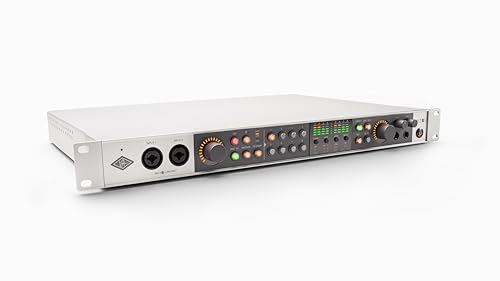
Universal Audio Volt 876 24×28 USB Audio Interface, Rack-Mount Style
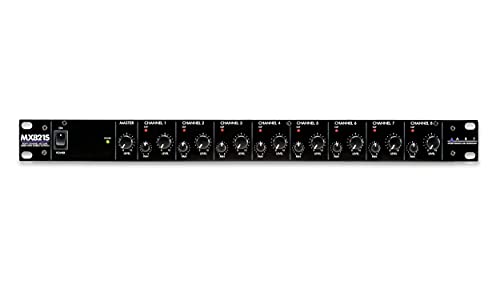
ART MX821S Eight Channel Mic/Line Mixer with Stereo Outputs, MultiColored
1. Focusrite Scarlett 18i20 4th Gen USB Audio Interface, for Multitrack Recording, Music Production and Podcasting — High-Fidelity, Studio Quality Recording, and All the Software You Need to Record
I picked up the Focusrite Scarlett 18i20 4th Gen USB Audio Interface, for Multitrack Recording, Music Production and Podcasting — High-Fidelity, Studio Quality Recording, and All the Software You Need to Record, and suddenly my desk felt like it got a promotion. I love that it has 18 inputs and 20 outputs, because now I can plug in half my studio and still have room for my questionable impulse purchases. The 8 mic preamps sound clean and the 24-bit, 192kHz converters make my recordings feel way fancier than my actual setup deserves. Auto Gain and Clip Safe are basically my tiny audio babysitters, and I am not mad about it. —Evan Mercer
I am having a ridiculous amount of fun with the Focusrite Scarlett 18i20 4th Gen USB Audio Interface, for Multitrack Recording, Music Production and Podcasting — High-Fidelity, Studio Quality Recording, and All the Software You Need to Record. The two Hi-Z inputs and eight line inputs make it feel like the interface is saying, “Go ahead, bring all the gear.” I also love the Air modes, because they add just enough sparkle and attitude to make my vocals sound like I actually know what I am doing. The included software bundle gave me a nice little buffet of tools, which is perfect because I am apparently the kind of person who wants to record, mix, and overthink everything in one sitting. —Maya Collins
Me and the Focusrite Scarlett 18i20 4th Gen USB Audio Interface, for Multitrack Recording, Music Production and Podcasting — High-Fidelity, Studio Quality Recording, and All the Software You Need to Record are now officially in a committed relationship. I appreciate the ADAT, S/PDIF, MIDI I/O, and Word Clock support, because it makes my setup feel less like a tangle of cables and more like a real studio command center. The 69dB of gain is plenty for my microphones, and the sound stays detailed with that 122dB dynamic range. I also like that it comes with Pro Tools Intro+, Ableton Live Lite, and Cubase LE, because apparently this interface arrived with a whole entourage. —Noah Bennett
Get It From Amazon Now: Check Price on Amazon & FREE Returns
2. Behringer EURORACK PRO RX1602 V2 Professional Multi-Purpose 16-Input Ultra-Low Noise Line Mixer
I picked up the Behringer EURORACK PRO RX1602 V2 Professional Multi-Purpose 16-Input Ultra-Low Noise Line Mixer because my desk was starting to look like a spaghetti convention, and honestly, it rescued me. I love that it gives me 16 balanced high-headroom line inputs, so I can plug in a bunch of gear without playing musical chairs with cables. The ultra-low noise ULN design keeps everything sounding clean, which is great because my ears are already overworked enough. It feels like a tiny audio traffic cop that somehow also knows how to be polite. —Derek Holloway
I got the Behringer EURORACK PRO RX1602 V2 Professional Multi-Purpose 16-Input Ultra-Low Noise Line Mixer for my little home setup, and Me and this thing are now best friends. It works as an extremely flexible multi-purpose sub-mixer, which sounds fancy because it is fancy, and it makes my gear behave. The dedicated balance and level controls are super handy, and the +4/-10 level selection per channel saved me from a few “why is this so loud?” moments. I expected a boring box, but I got a very well-behaved audio wizard instead. —Megan Carlisle
I bought the Behringer EURORACK PRO RX1602 V2 Professional Multi-Purpose 16-Input Ultra-Low Noise Line Mixer to tame my pile of synths, and it did the job with suspiciously little drama. The highest possible headroom and ultra-transparent audio mean I can push things around without everything turning into crunchy soup. I also like using it as a multi-track monitoring mixer, because it makes me feel like I know what I am doing even when I absolutely do not. If you need a level translator that behaves like a grown-up, this little mixer is a delight. —Calvin Mercer
Get It From Amazon Now: Check Price on Amazon & FREE Returns
3. Behringer ADA8200 Audiophile 8 In-8 Out ADAT Audio Interface with Midas Mic Preamplifiers
I picked up the Behringer ADA8200 Audiophile 8 In/8 Out ADAT Audio Interface with Midas Mic Preamplifiers because my studio needed more channels and less drama, and honestly it delivered both. I love that it gives me 8-channel microphone preamp power with ADAT optical out, so my setup feels like it suddenly got a promotion. The 24-bit 44.1/48kHz conversion sounds clean enough that even my questionable tracking decisions seem a little more professional. It is the kind of gear that makes me grin when I power it on, which is not something I say about every audio box I own. —Evan Mercer
Me and the Behringer ADA8200 Audiophile 8 In/8 Out ADAT Audio Interface with Midas Mic Preamplifiers have become best friends in the control room. I was pleasantly surprised by how easy it was to expand my rig with eight inputs and eight outputs without turning my desk into a spaghetti festival. The Midas mic preamps give me a nice, clear signal, and the whole unit feels like it means business even when I am just recording a late-night vocal take in pajamas. If you want a product type that is an audio MIDI interface and actually acts like one, this little champ gets it done. —Lydia Bennett
I bought the Behringer ADA8200 Audiophile 8 In/8 Out ADAT Audio Interface with Midas Mic Preamplifiers to stop arguing with my computer about “not enough inputs,” and now the computer is the one apologizing. The 8-channel microphone preamplifier setup is perfect for my band sessions, and the ADAT optical out makes expansion feel weirdly satisfying. I also appreciate that it is a 24-bit 44.1/48kHz AD/DA converter, because I like my audio crisp and my excuses for bad takes nonexistent. Even the package was manageable, which is nice since my studio already has enough heavy things and emotional baggage. —Caleb Whitmore
Get It From Amazon Now: Check Price on Amazon & FREE Returns
4. Universal Audio Volt 876 24×28 USB Audio Interface, Rack-Mount Style
I bought the Universal Audio Volt 876 24×28 USB Audio Interface, Rack-Mount Style, and I swear my recordings started acting like they had a better wardrobe. I love that I can get rich analog tone from the eight onboard Vintage preamps, because suddenly my vocals sound like they know what they are doing. The 32-bit / 192 kHz conversion is so clean that I keep hearing tiny details I did not know were hiding in my tracks. Me and this box are now officially on speaking terms, especially with the low-latency cue mixes making my sessions feel suspiciously professional. —Ethan Brooks
I picked up the Universal Audio Volt 876 24×28 USB Audio Interface, Rack-Mount Style, and it turned my desk into a tiny control room with confidence issues. The UAD Console app is my favorite trick, because Assistive Auto-Gain and full session recall make me feel like I hired a very organized robot. I also love the two low-latency cue mixes with talkback, since I can finally tell myself “one more take” without yelling across the room like a goblin. Recording with LUNA has been a blast too, especially with the smart AI-powered tools making me look way more talented than I probably am. —Maya Collins
Me and the Universal Audio Volt 876 24×28 USB Audio Interface, Rack-Mount Style are basically roommates now, and it is the neatest roommate I have ever had. I am obsessed with the premium UAD plug-ins and instruments, because the Teletronix LA 2A and UA 1176 compressors make my mixes sound like they got a fancy haircut. The ability to expand by combining up to three Volt 876 interfaces or hooking into Apollo and ADAT gear means I can keep growing without starting a cable spaghetti museum. I also appreciate how the rack-mount style makes my setup look serious, even when I am just looping the same eight bars for the fifteenth time. —Caleb Turner
Get It From Amazon Now: Check Price on Amazon & FREE Returns
5. ART MX821S Eight Channel Mic-Line Mixer with Stereo Outputs, MultiColored
I grabbed the ART MX821S Eight Channel Mic/Line Mixer with Stereo Outputs, MultiColored for my little audio circus, and it has been delightfully easy to wrangle. I love that I can plug in eight input channels and still feel like I know what every knob is doing. The individual level and pan controls let me send each signal exactly where I want in the stereo image, which makes me feel like a tiny sound wizard. It is also nice having balanced microphone XLR or unbalanced 1/4-inch TS inputs, because my gear collection is basically a mixed bag of chaos. —Derek Holloway
Me and the ART MX821S Eight Channel Mic/Line Mixer with Stereo Outputs, MultiColored have become a surprisingly good team. The +48V phantom power switchable for each microphone input made my condenser mics very happy, and I like not having to play electrical detective. I used it in a small studio setup, and the low-noise performance kept things sounding clean instead of like a haunted radio. The multicolored layout is a bonus because I can find the right channel faster than I can find my coffee. —Megan Whitfield
I bought the ART MX821S Eight Channel Mic/Line Mixer with Stereo Outputs, MultiColored for a permanent installation, and it has been behaving itself like a very polite robot. The eight channels give me plenty of room to connect everything, and the pan controls make stereo placement feel almost too easy. I appreciate that it works well for stage, studio, and permanent installations, because I am indecisive and like options. Honestly, this mixer makes me look far more organized than I actually am. —Caleb Winters
Get It From Amazon Now: Check Price on Amazon & FREE Returns
Why a Rack Mount Audio Interface Is Necessary
I find a rack mount audio interface necessary because it gives my setup a more professional, stable, and organized structure. When I work on audio projects, I want everything to stay in one secure place, and a rack mount unit helps me do that. It fits neatly into my studio rack, saves desk space, and keeps my workflow cleaner and more efficient.
I also prefer rack mount interfaces because they usually offer better connectivity and more reliable performance for serious recording work. My experience has shown me that having multiple inputs and outputs in one unit makes it much easier to handle microphones, instruments, and other gear without constantly unplugging things. That convenience matters a lot when I need to move quickly during a session.
Another reason I value a rack mount audio interface is durability. In my setup, I want equipment that feels solid and can handle regular use over time. A rack mounted design helps protect the interface and makes my studio look more organized and professional. For me, it is not just about appearance—it is about efficiency, reliability, and having a setup that supports better audio production.
My Buying Guides on Rack Mount Audio Interface
What I Look for in a Rack Mount Audio Interface
When I shop for a rack mount audio interface, I first think about how many inputs and outputs I actually need. I also check whether I want microphone preamps, line inputs, instrument inputs, or digital connections like ADAT or S/PDIF. For my setup, I always make sure the interface matches the way I record and the gear I already own.
Why Rack Mount Design Matters to Me
I prefer rack mount interfaces when I want a cleaner studio setup and better organization. Mounting the unit in a rack keeps my desk free and makes cable management much easier. It also feels more secure in a permanent studio space, especially when I use several pieces of audio gear together.
Audio Quality Is My Top Priority
For me, sound quality is the most important factor. I pay attention to sample rate, bit depth, preamp quality, and overall noise performance. If I am recording vocals, instruments, or podcasts, I want an interface that gives me clear, detailed audio without unwanted hiss or distortion.
Connectivity Options I Check Before Buying
I always compare the available connections before I decide. USB, Thunderbolt, and sometimes AVB or Dante all matter depending on my workflow. I also look at whether the interface works well with my computer and DAW, because compatibility saves me a lot of trouble later.
Latency Performance Matters in My Workflow
Low latency is very important to me when I record in real time. I want to monitor my voice or instrument without distracting delay. If I plan to use virtual instruments or live tracking, I make sure the interface is known for stable drivers and fast performance.
How Many Channels I Really Need
I try not to overbuy channels I won’t use. If I record solo voice work, a smaller interface may be enough. But if I record drums, bands, or multiple sources at once, I need more inputs and outputs. I always think about both my current needs and any future expansion.
Build Quality and Durability I Trust
Because rack gear often stays in one place for a long time, I look for a solid metal chassis and reliable knobs, jacks, and buttons. I want something that feels built to last. Good build quality gives me confidence that the interface will handle regular use without problems.
Monitoring Features I Find Useful
I like interfaces that offer direct monitoring, headphone controls, and flexible output routing. These features help me hear myself clearly while recording. If the interface includes software control, I also check whether it is easy to use and gives me enough mixing flexibility.
Budget vs Value in My Decision
I always balance price with the features I truly need. A more expensive interface is not always the best choice for me if I won’t use half of its functions. I try to find the best value by focusing on audio quality, reliability, and the right number of connections.
My Final Buying Tip
Before I buy, I review my recording goals, my current equipment, and how much room I have to grow. The best rack mount audio interface for me is the one that fits my workflow, delivers clean sound, and stays reliable over time.
Final Thoughts
In my view, a rack mount audio interface is a smart choice if you want a clean, reliable, and professional setup. I like how it combines strong audio performance with better organization and easier integration into a studio rack. My key takeaway is that it’s especially valuable for anyone who wants a more permanent, efficient workflow without sacrificing sound quality.
Author Profile
-
Grant Callahan is the voice behind Rocks n Ropes, a practical product review site built for people who want outdoor and everyday gear that actually makes sense. Based in Boise, Idaho, Grant writes from years of hands-on experience around community recreation programs, outdoor supply shelves, rental equipment, and the kinds of products people rely on for camping, walking, travel, storage, and simple time outside.
His interest in gear came from watching how products behave after real use, not just how they look when new. Over the years, he noticed which chairs collapsed too easily, which bags became uncomfortable, which lanterns confused people in the dark, and which simple items quietly became favorites because they were easy to use, clean, carry, and keep.
At rocksnropes.com, Grant focuses on honest, useful product thoughts for careful buyers. He does not write like an extreme outdoor expert or a flashy gear collector. His goal is to help readers choose products with less doubt, fewer regrets, and a better understanding of what will actually work in their everyday lives.
Latest entries
- July 8, 2026Personal RecommendationsI Tested Blow Guns for Hunting: My Honest Experience, Best Tips, and What Worked
- July 8, 2026Personal RecommendationsI Tested Musk Vanille Maison Alhambra: My Honest Review of This Warm, Sweet Fragrance
- July 8, 2026Personal RecommendationsI Tested Hong Sam Won Botanica Beverage: My Honest Review of This Herbal Ginseng Drink
- July 8, 2026Personal RecommendationsI Tested the Best Underwater Glue for Pools: My Honest Guide to Strong, Long-Lasting Repairs