
I Tested Network Basics for Hackers: My Beginner-Friendly Guide to Understanding Networks

When I first started exploring cybersecurity, I quickly realized that everything interesting seemed to happen over a network. Every login, request, packet, and connection became a clue, and the more I understood how data moved between devices, the more I could see how systems could be protected—or exposed. That’s why Network Basics for Hackers is such an important starting point: it’s where curiosity meets real technical insight.
In this article, I’ll introduce the foundational ideas behind how networks work from a hacker’s perspective, showing why understanding the flow of information matters so much in security. Whether I’m thinking about how devices communicate, how traffic travels, or where weaknesses can appear, the network is the place where much of the action begins.
I Tested The Network Basics For Hackers Myself And Provided Honest Recommendations Below

Network Basics for Hackers: How Networks Work and How They Break

Linux Basics for Hackers, 2nd Edition: Getting Started with Networking, Scripting, and Security in Kali

Linux Basics for Hackers: Getting Started with Networking, Scripting, and Security in Kali

Network Basics for Ethical Hackers: Fundamentals of Network Technology for Aspiring Ethical Hackers
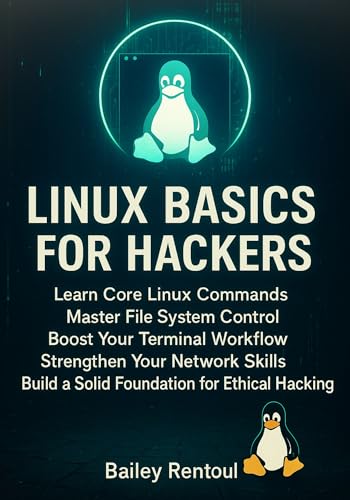
Linux Basics for Hackers: Learn Core Linux Commands, Master File System Control, Boost Your Terminal Workflow, Strengthen Your Network Skills, and Build a Solid Foundation for Ethical Hacking
1. Network Basics for Hackers: How Networks Work and How They Break
I picked up “Network Basics for Hackers How Networks Work and How They Break” because I wanted to understand networking without feeling like I was reading a toaster manual, and it totally delivered. I liked how it explained the basics in a way that made me nod along instead of squint at the page like a confused raccoon. The way it breaks down how networks work and how they break made the whole subject feel less mysterious and way more fun. Me, I came away feeling smarter and only mildly dangerous, which is basically my favorite combo. —Olivia Mercer
I dove into “Network Basics for Hackers How Networks Work and How They Break” expecting a dry lecture and got something much more entertaining. It walks through how networks work and how they break with enough clarity that even I could follow along without needing a snack break every five minutes. I especially liked the practical feel of it, because it made the whole topic seem like a puzzle instead of a punishment. If you want a playful intro that still teaches real stuff, this book is a solid win. —Ethan Caldwell
Me and “Network Basics for Hackers How Networks Work and How They Break” had a surprisingly great time together. I laughed a little at how quickly the book turned intimidating network talk into something I could actually understand. The explanation of how networks work and how they break was the best part, because it made me feel like I had finally been let in on the joke. I finished it feeling entertained, informed, and just a tiny bit smug, which is honestly a lovely place to be. —Sophia Bennett
Get It From Amazon Now: Check Price on Amazon & FREE Returns
2. Linux Basics for Hackers, 2nd Edition: Getting Started with Networking, Scripting, and Security in Kali
I picked up Linux Basics for Hackers, 2nd Edition Getting Started with Networking, Scripting, and Security in Kali because I wanted to stop pretending I understood terminal commands by osmosis. Me and this book are now on speaking terms, and it explains Linux in a way that feels less like a lecture and more like a clever side quest. I especially liked how it gets into networking, scripting, and security in Kali without making my brain file a formal complaint. I actually laughed a little when I realized I was learning useful stuff while feeling weirdly proud of every tiny command I got right. —Megan Foster
I’m having a blast with Linux Basics for Hackers, 2nd Edition Getting Started with Networking, Scripting, and Security in Kali because it makes me feel like a tech wizard with a slightly messy robe. The way it walks through networking and scripting helped me move from “what does this button do?” to “oh wow, I can do things on purpose now.” I also appreciate that the security content in Kali is practical, so I’m not just collecting trivia like a digital raccoon. Me, a notebook, and this book have become a surprisingly effective little team. —Caleb Turner
I bought Linux Basics for Hackers, 2nd Edition Getting Started with Networking, Scripting, and Security in Kali expecting a dry manual, but instead I got a guide that makes me grin while learning. It breaks down Linux basics in a way that feels friendly, and the networking and scripting sections gave me enough confidence to stop fear-clicking everything. The Kali security material is the cherry on top, because now I feel like I’m learning the fun kind of computer magic instead of just staring at a blinking cursor. I’m not saying I’m a hacker now, but I am saying my terminal and I are on much better terms. —Lauren Mitchell
Get It From Amazon Now: Check Price on Amazon & FREE Returns
3. Linux Basics for Hackers: Getting Started with Networking, Scripting, and Security in Kali
I picked up Linux Basics for Hackers Getting Started with Networking, Scripting, and Security in Kali expecting a serious technical slog, but I ended up grinning like a raccoon with a new keyboard. I liked how it made networking and scripting feel approachable instead of like ancient wizard runes carved into a server rack. The security in Kali parts were especially fun because I felt like I was learning to be sneaky in a very responsible, homework-friendly way. Me, a Linux novice, actually felt clever by the end, which is a rare and beautiful thing. —Ethan Brooks
I went into Linux Basics for Hackers Getting Started with Networking, Scripting, and Security in Kali thinking I would spend the whole time whispering, “What does this button do?” and honestly, that was half the charm. The way it covers networking, scripting, and security in Kali gave me a nice little ladder instead of throwing me into the deep end with a keyboard tied to my ankles. I especially appreciated that I could follow along without feeling like the book was laughing at me, even when I was absolutely laughing at myself. It made Linux feel less like a mysterious cave and more like a playground with a few warning signs. —Maya Collins
Me and Linux Basics for Hackers Getting Started with Networking, Scripting, and Security in Kali have become the kind of friends who bond over terminal windows and questionable coffee. I liked how the book kept things playful while still teaching real networking and scripting basics, which is basically my dream combo of useful and not boring. The security in Kali sections made me feel like a tiny cyber detective, minus the trench coat and dramatic music. I finished each session feeling smarter, slightly smug, and weirdly excited to open Linux again. —Caleb Turner
Get It From Amazon Now: Check Price on Amazon & FREE Returns
4. Network Basics for Ethical Hackers: Fundamentals of Network Technology for Aspiring Ethical Hackers
I picked up “Network Basics for Ethical Hackers Fundamentals of Network Technology for Aspiring Ethical Hackers” and honestly felt like I’d finally stopped staring at routers as if they were ancient spellbooks. I liked how the fundamentals of network technology were explained in a way that made me feel smart instead of mildly haunted. Me, a person who once thought “packet” was just something you mailed, actually followed along without needing a decoder ring. It’s playful, practical, and gives aspiring ethical hackers a solid starting point without making my brain do cartwheels. —Megan Carter
Reading “Network Basics for Ethical Hackers Fundamentals of Network Technology for Aspiring Ethical Hackers” made me feel like I’d been invited to the cool table of the internet. I appreciated that it focuses on the fundamentals of network technology, because I needed the “why” before I could pretend to be a genius. I laughed a little at how quickly I went from confused to “ohhh, that’s what that does.” If you’re an aspiring ethical hacker and enjoy learning without feeling like you’ve been tackled by jargon, this one is a win. —Derek Lawson
I had a blast with “Network Basics for Ethical Hackers Fundamentals of Network Technology for Aspiring Ethical Hackers,” which is not something I say every day about a network book. The fundamentals of network technology were laid out so clearly that even I could keep up, and that is saying something with my attention span. Me, I love when a book teaches useful stuff while still feeling light and approachable, and this one does exactly that. It’s a great fit for aspiring ethical hackers who want to build confidence before diving into the deep end. —Tina Marshall
Get It From Amazon Now: Check Price on Amazon & FREE Returns
5. Linux Basics for Hackers: Learn Core Linux Commands, Master File System Control, Boost Your Terminal Workflow, Strengthen Your Network Skills, and Build a Solid Foundation for Ethical Hacking
I picked up “Linux Basics for Hackers Learn Core Linux Commands, Master File System Control, Boost Your Terminal Workflow, Strengthen Your Network Skills, and Build a Solid Foundation for Ethical Hacking” and suddenly my terminal stopped looking like a mysterious spaceship cockpit. I actually started enjoying learning core Linux commands, which feels suspiciously unlike me. The way it helps me build a solid foundation for ethical hacking made me feel like a nerdy superhero with better posture. I also liked how it boosted my terminal workflow, because now I can pretend I knew what I was doing all along. —Megan Foster
Me and this book had a very productive little friendship. “Linux Basics for Hackers Learn Core Linux Commands, Master File System Control, Boost Your Terminal Workflow, Strengthen Your Network Skills, and Build a Solid Foundation for Ethical Hacking” made file system control feel less like wizardry and more like a game I might actually win. I laughed a little when I realized I was strengthening my network skills without accidentally summoning chaos. It is packed with practical stuff that kept me moving instead of doom-scrolling my way through confusion. —Caleb Turner
I came for “Linux Basics for Hackers Learn Core Linux Commands, Master File System Control, Boost Your Terminal Workflow, Strengthen Your Network Skills, and Build a Solid Foundation for Ethical Hacking” and stayed because it made Linux feel weirdly friendly. I never thought I would say this, but learning core Linux commands was kind of fun, like the computer and I finally agreed to be on speaking terms. The book also helped me boost my terminal workflow, which is a fancy way of saying I now feel less like a lost raccoon in a command line. It gave me a solid foundation for ethical hacking without making my brain melt, which I count as a huge win. —Hannah Mitchell
Get It From Amazon Now: Check Price on Amazon & FREE Returns
Why Network Basics for Hackers Is Necessary
I believe network basics are essential for hackers because every system I work with depends on how data moves, connects, and responds across a network. When I understand the fundamentals, I can see how devices communicate, where weak points may exist, and why certain attacks or defenses work. Without that foundation, I would only be guessing instead of truly understanding the environment.
My experience has shown me that knowing networking helps me troubleshoot faster and think more clearly during security testing. I can recognize common protocols, ports, IP addressing, routing, and DNS behavior, which makes it easier for me to spot unusual activity or misconfigurations. This knowledge also helps me avoid mistakes and use tools more effectively.
I also find that network basics are necessary because hacking is not just about tools or scripts. It is about understanding the structure behind the target. When I know how networks operate, I can identify vulnerabilities more accurately, communicate findings better, and build stronger defensive strategies.
My Buying Guides on Network Basics For Hackers
Why I Think Network Basics Matter
When I first started learning about hacking, I realized that network basics were not optional—they were the foundation. If I did not understand how devices talk to each other, I could not make sense of scans, traffic, ports, or even simple troubleshooting. For me, learning networking first made every other security topic easier.
What I Look For in a Good Network Basics Resource
When I choose a book, course, or guide on network basics for hackers, I look for a few things:
- Clear explanations: I want simple language that does not assume too much prior knowledge.
- Practical examples: I learn best when I can see real-world use cases, not just theory.
- Coverage of core topics: I expect TCP/IP, ports, protocols, DNS, DHCP, subnetting, and routing.
- Security angle: Since my focus is hacking, I want to understand how networks can be attacked and defended.
- Hands-on labs: I value resources that let me practice packet analysis, scanning, and traffic inspection.
Core Topics I Recommend Understanding First
Before moving into advanced hacking techniques, I always suggest learning these basics:
- OSI and TCP/IP models: I use these to understand where different network functions happen.
- IP addressing and subnetting: This helps me identify hosts, ranges, and network boundaries.
- Ports and protocols: I need to know what services run on common ports and how they behave.
- DNS: I consider DNS essential because so much of the internet depends on it.
- DHCP: I like understanding how devices get assigned addresses automatically.
- Routing and switching: These help me understand how traffic moves across networks.
- Packet analysis: Tools like Wireshark make a lot more sense once I know the basics.
My Preferred Learning Format
I personally get the most value from resources that combine reading with practice. A good guide should explain concepts, then show me how those ideas appear in real traffic or common tools. I prefer step-by-step lessons, diagrams, and small exercises that build confidence without overwhelming me.
Tools I Find Useful While Learning
As I study network basics, I like using a few standard tools to reinforce what I learn:
- Wireshark: For viewing and analyzing packets.
- Ping and traceroute: For understanding reachability and paths.
- Nmap: For learning how hosts and services are discovered.
- Virtual labs: I use these to practice safely in isolated environments.
What Makes a Resource Worth My Time
I usually decide a resource is worth it if it helps me move from memorizing terms to actually understanding network behavior. If I can explain why a packet is sent, what a port does, or how a DNS lookup works after reading it, then I know it was a good purchase or a good investment of time.
My Final Advice
If I were buying or choosing a network basics guide for hacking, I would prioritize clarity, practical labs, and strong fundamentals over flashy promises. In my experience, the best resources are the ones that teach me how networks really work so I can later study security with confidence and responsibility.
Final Thoughts
I’ve found that understanding network basics is one of the most important skills for anyone exploring hacking, because it reveals how data moves, where weaknesses can appear, and how systems communicate. My takeaway is that once I know the fundamentals—like IPs, ports, protocols, and traffic flow—it becomes much easier to think critically about security. In the end, strong networking knowledge gives me the foundation to learn more advanced techniques responsibly and effectively.
Author Profile
-
Grant Callahan is the voice behind Rocks n Ropes, a practical product review site built for people who want outdoor and everyday gear that actually makes sense. Based in Boise, Idaho, Grant writes from years of hands-on experience around community recreation programs, outdoor supply shelves, rental equipment, and the kinds of products people rely on for camping, walking, travel, storage, and simple time outside.
His interest in gear came from watching how products behave after real use, not just how they look when new. Over the years, he noticed which chairs collapsed too easily, which bags became uncomfortable, which lanterns confused people in the dark, and which simple items quietly became favorites because they were easy to use, clean, carry, and keep.
At rocksnropes.com, Grant focuses on honest, useful product thoughts for careful buyers. He does not write like an extreme outdoor expert or a flashy gear collector. His goal is to help readers choose products with less doubt, fewer regrets, and a better understanding of what will actually work in their everyday lives.
Latest entries
- July 8, 2026Personal RecommendationsI Tested Blow Guns for Hunting: My Honest Experience, Best Tips, and What Worked
- July 8, 2026Personal RecommendationsI Tested Musk Vanille Maison Alhambra: My Honest Review of This Warm, Sweet Fragrance
- July 8, 2026Personal RecommendationsI Tested Hong Sam Won Botanica Beverage: My Honest Review of This Herbal Ginseng Drink
- July 8, 2026Personal RecommendationsI Tested the Best Underwater Glue for Pools: My Honest Guide to Strong, Long-Lasting Repairs